
three's company town
Or, why I'm planning a field trip to point and laugh at George Pullman's grave.

Hi friends!
First, a quick update for those of you in the UK, Australia, or New Zealand: the ebook of A Tip for the Hangman is currently half off just for you! Now is the perfect time to snag yourself a copy of my first novel, whose elevator pitch is “grad student just wants to be gay and write poems but accidentally becomes important at work, except work is international espionage.” Grab it here before August 1, when you’ll have to pay full-price again.
I’ve been hard at work on a bunch of things lately: some day-job-related, some author-job-related, some related to the crochet pattern I recently found for a tapestry of a goose that can wear different outfits based on the season. And through one of those avenues (I’ll let you guess which), I came across my favorite thing: a man who SUCKS in a way that turns me into this gif:

And that’s always the motivation I need to fire up the ol’ Substack.
So join me, won’t you, for a deep dive into the life of:
George Pullman, One of the Most Hated Men in All of Chicago History and That List, As You Can Imagine, Is Not Short
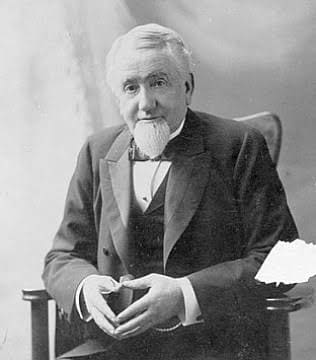
George Pullman was born in 1831 in Brocton, New York and got his first big-boy job in the 1850s working on the Erie Canal. For my non-US readers, the Erie Canal is:
A man-made canal that connected the Great Lakes to the Atlantic Ocean
Very important in the history of North American shipping
One of the five things you’re allowed to become super-interested in if you are a Midwestern Dad1
It’s not really relevant to most of Pullman’s story, but I’m nothing if not a Midwestern Dad at heart, so I’d be remiss not to canal it up at the start here.
Ups-ie-Daisy
You’d be forgiven for assuming that Pullman’s job on the canal involved digging or hauling away big wagonloads of dirt, which are the only activities I associate with canal-ing. But that would not be weird or whimsical enough for the subject of a Dirtbags Through the Ages post, now would it? Instead, Pullman’s job was to move buildings out of the way of the incoming canal.
Demolish buildings? No, you heard me. Move. His job was to hup the buildings and put them somewhere else, a thing you can apparently do.

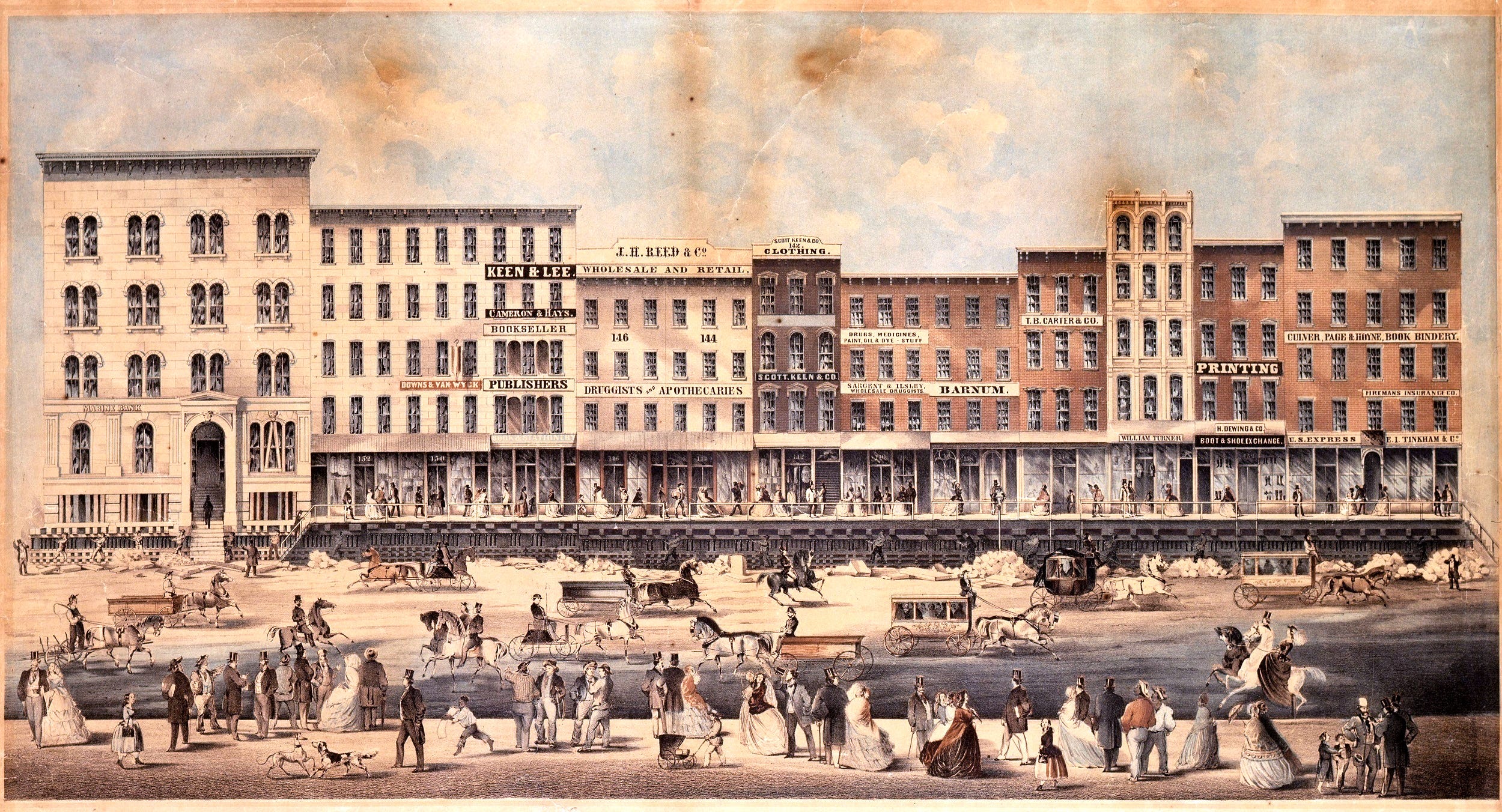
Meanwhile, several hundred miles to the west, the 20-year-old city of Chicago had a problem. Well, it had several problems, but only one of them was particularly relevant for a guy in the “pick up houses and move them somewhere else” business: it was built on a swamp, and all of the buildings were slowly sinking into the streets. And when I say “streets,” what I really mean are a bunch of wooden planks beneath six inches of standing sewage.
The city called Pullman and his partner Charles Moore to come to Chicago and start raising all of the buildings in town so they could make the street above the water table. And goddamn if Pullman didn’t show up and do just that.
Without closing the buildings, mind you! Pullman and Moore were raising fully operational hotels and office buildings. People just walking in and out of buildings while they were being hupped.
I’ve read many books and articles about the process of raising the buildings in the Chicago Loop, and I can’t make heads or tails of the mechanics of this. I am good at many things, and structural engineering is not one of them. Which, honestly, is fine, because I’m gonna keep picturing Pullman picking up the Matteson House hotel with his bare hands and yeeting it down the street onto a new foundation while a woman in a bustle soars out the front door like Mary Poppins, and you cannot stop me.
Train or Shine
This brings us to 1864, when Pullman had raised all the buildings that needed raising and had to find something else to do with his time. In 1860s Chicago, there were three main career paths you could go into: hog butchering, grain speculation, or crime.2 Pullman was an innovator, though, and he came up with a secret fourth option: making tricked-out railway cars with chandeliers and caviar and the whole nine yards, which he named the Pullman Palace car because he never met a thing he wouldn’t put his name on.
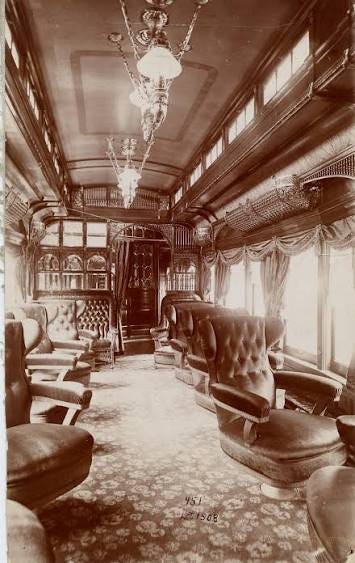
Now, I am of two minds about the Pullman Palace car. As a person who’s never flown first class and recently got a 40% discount off a theater ticket by deliberately sitting underneath the air vent with an obstructed view, most of me feels like this is the start of a movement I do not care for. As a person who believes more things should be modeled after Agatha Christie’s Murder on the Orient Express, however, I have no choice but to support the vibe.
People were a little lukewarm on the idea of “Versailles on Wheels” at first, but Pullman scored the biggest possible publicity for his new luxe train car by using it to transport the body of recently assassinated President Abraham Lincoln to his funeral in Springfield, Illinois. And as the old saying goes, if it’s good enough for the corpse of the president, it’s good enough for me! Besides, one thing about Americans is we love to pay an extra 25 cents for a little treat.
All this to say, before the 1860s were over, the Pullman Palace cars were raking in serious money, making our man George a billionaire.3
Porter? I Hardly Know ‘Er!
Sidebar: Before I started reading up on Pullman and shaking my fist at his ghost, I’d only ever heard of him because of the Pullman Porters. Pullman felt strongly that his luxury sleeping cars needed to come with the best possible service, so he hired a fleet of free Black men to provide every possible service to travelers, from taking tickets to hemming pants. Why there was such a high demand for pant maintenance on 19th-century train lines is a question none of my sources have addressed.
Being a Pullman Porter was one of the best-paid, highest-prestige jobs available for Black men right after the Civil War, and Pullman was the single largest employer of Black people at this point in history. It also gave Black men unprecedented opportunity to travel the country.
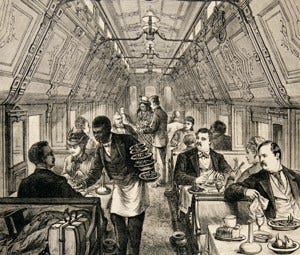
Do we give him credit for that? Even though he explicitly said that he only wanted to hire Black men because he was looking for the level of service offered on a plantation?
Honestly, there’s nuance, but my underlying impression is fuck him, and I stand by it based on what’s happening next.
Union-Busting Disneyland!
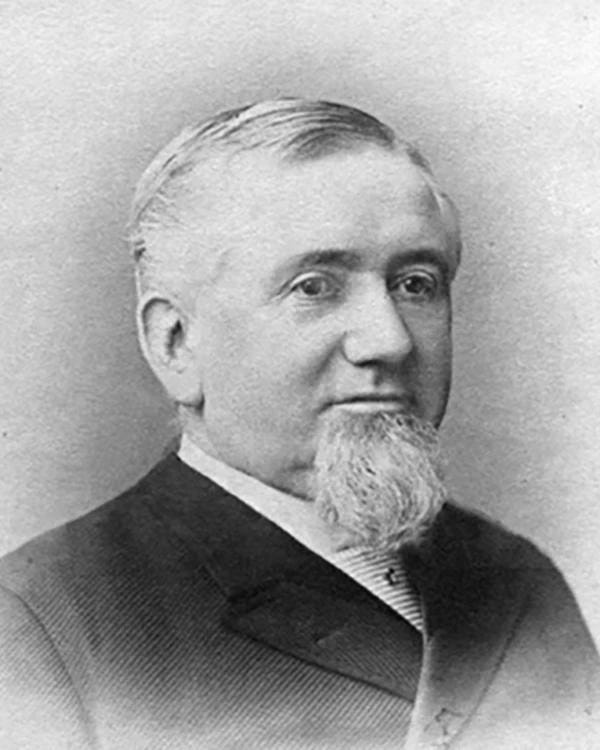
In the 1880s, Pullman decided it wasn’t enough for him to be a railroad magnate, building-lifter, and paternalistically-racist shitheel. No, he had to buy a plot of land just south of the city and build his own company town on it, named Pullman, because if you were expecting Mr. George Pullman to lay his eyes upon a thing and not slap his name on it you haven’t been paying attention.
The goal of Pullman as a town was to exert complete control over workers’ lives so that they couldn’t form unions, cause unrest, or do anything that could lose George Pullman money. Workers in his factories lived in the town and had access to basic amenities, but Pullman was passing civil statutes left and right to make sure they couldn’t do much more than work and sleep. Here’s a brief rundown of the laws on the books in Pullman, Illinois:
No saloons or drinking
No private charitable organizations
No newspapers not approved and censored by George Pullman personally
No churches, unless the pastor was appointed by George Pullman and respected him second only to God the Father, a real thing one of the pastors was quoted as saying
No political parties and no elections
No public assembly or speech-giving
No plays or musicals that George Pullman didn’t think his daughter Florence would like
No home ownership allowed, only paying rent to George Pullman
George Pullman could evict you from your house if he thought you smelled bad or didn’t sweep enough
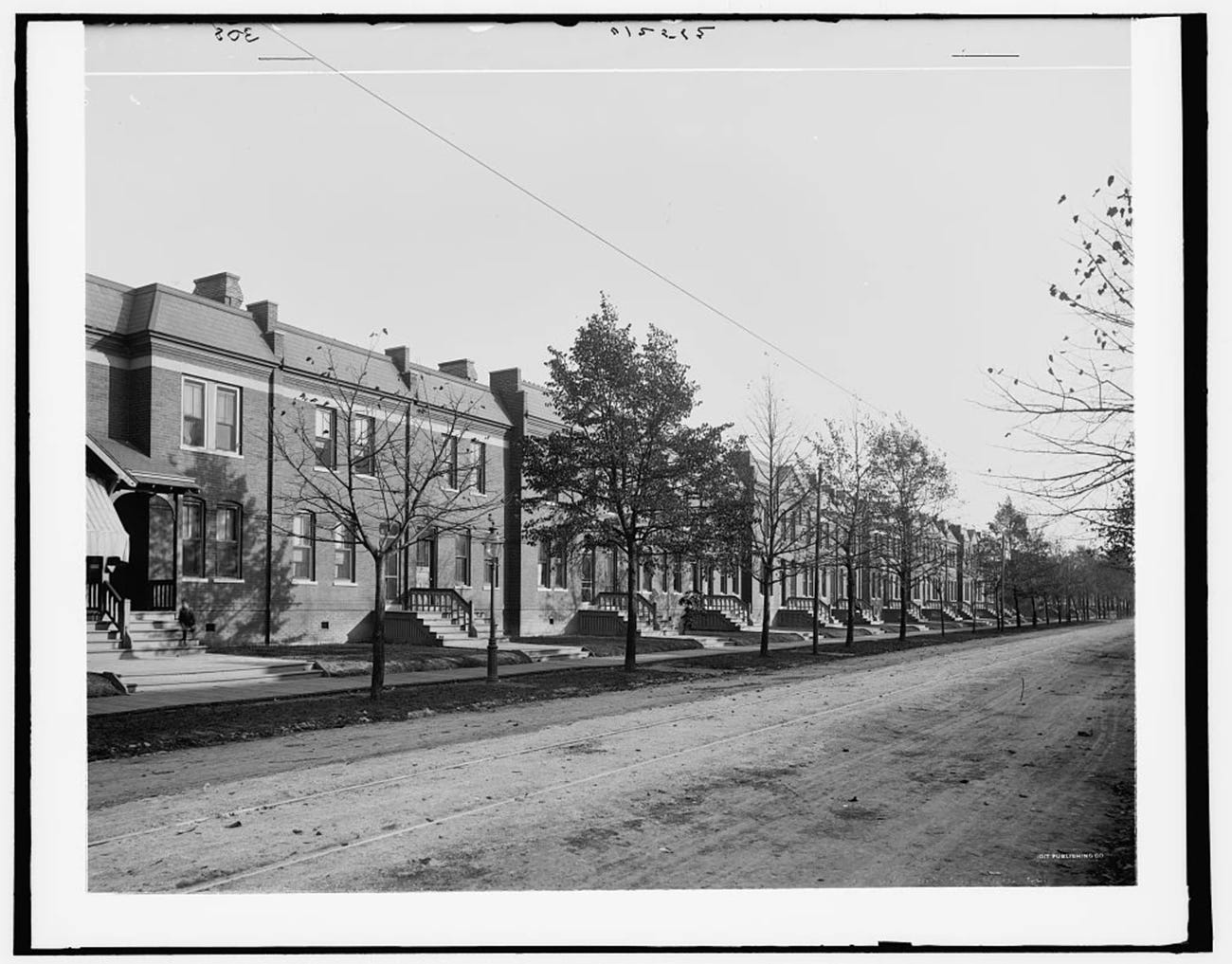
It’s all giving Henry Ford (derogatory) and I hate it.
Know who didn’t hate it, though? The rich 19th-century people who didn’t have to live there. During the Columbian Exposition of 1893, the town of Pullman was one of the biggest tourist draws for the city of Chicago, next to the Union Stockyards. People sure did love to see the working class being oppressed while they were on vacation. Go figure!
*NPINK(erton)
The working-class, god bless em, wouldn’t stand for this forever. It all came to a head in 1894, when the economy crashed and Pullman thought it was a cool and chill idea to lay off workers and cut his remaining employees’ wages while increasing rent on company housing and continuing to make payoffs to shareholders.
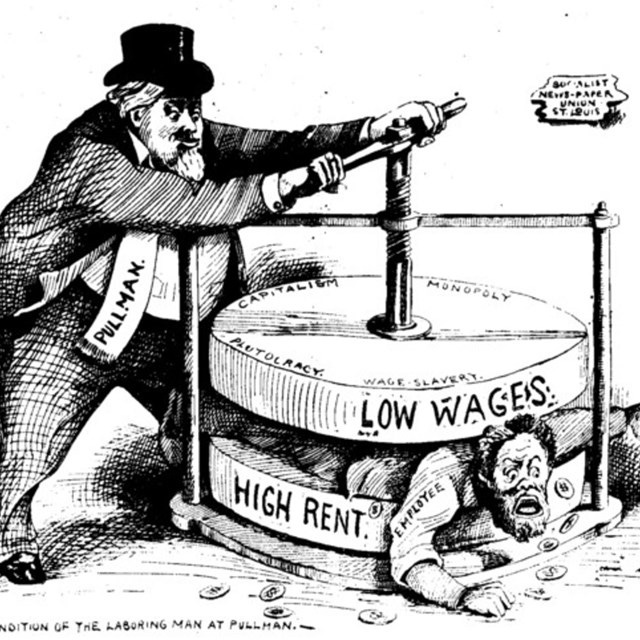
It’s not every day that your boss and your landlord are the same person, but it is convenient when there’s only one person to blame for everything that’s going wrong in your life, you see him every day, his name is on every building, and he’s the reason you have to cross city limits to get a beer. The people of Pullman walked up to the office of Pullman the guy and demanded that he hear their grievances.
Pullman, cool and chill guy that he was, refused to see them and said everyone who was complaining would be fired. So obviously the whole factory went on strike.
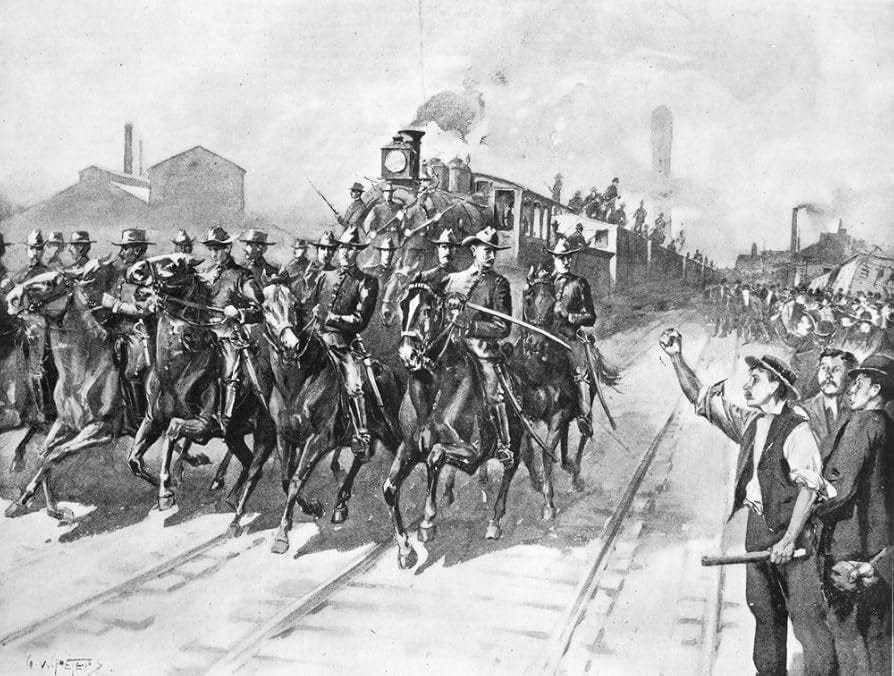
Then the socialists got involved. Under the leadership of Eugene V. Debs,4 agitators and strikers started rioting and derailing train cars, which caused Pullman to call in the Pinkertons and try to break up the strike. Quick pro tip: if you’re not sure who’s right in a particular argument, but you’re the one calling in the Pinkertons, you’re wrong.
The strike lasted for most of the summer of 1894 and led to several arrests, multiple trains lit on fire, and at least two instances of the cops and the Pinkertons opening fire on a crowd, with a total of 34 people dead.
Crypt Creeper
Finally, the US government passed an injunction to break up the strike and sent in federal troops, which eventually wrapped up the whole mess. The feds did create the Labor Day holiday after this, as a sort of “sorry we ruined your unions” consolation prize.
Pullman would say that he won the strike, but everyone in the country, up to and including President Grover Cleveland, looked around at the smoking ruins of the dystopian Disneyland situation in Pullman and said “no, my guy, you’re wrong.” Pullman got sued by about a dozen different companies, but before he could fully lawyer up to fight back, he died of a heart attack, and the company town fizzled out into the normal, vaguely haunted town it is today.
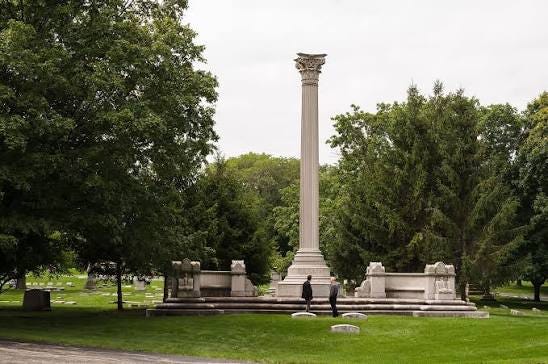
George Pullman is buried in Graceland Cemetery, in a lead-lined coffin buried in a full pit of reinforced concrete and steel, because he already knew that the workers were going to dig up his body and vandalize his grave. Once again, if you are 100% certain your workers are going to dig up your body and vandalize your grave, maybe take a step back to consider your life and your choices.
Coda: I went to findagrave.com to check on all of this and found what is possibly the funniest public comment left not four weeks ago on George Pullman’s grave entry, and I will be laughing about it until the day I die.

Thus ends the life of George Pullman, a man whose name I’ve seen regularly on Chicago-area signs for 12 years without knowing a damn thing about him. Next time I drive through the Pullman Historic District I will roll down my window and flip his ghost the bird, and I hope you will join me if you’re ever in the area.
All right, that’s all for this time! Thank you as always for joining me on my increasingly erratic journeys down historical rabbit holes. Until next time, be well, and if you’re looking for a career change but are wary about the current state of the economy may I suggest looking into how to hup buildings, because I assume there’s still a market for that,
-Allison
The other four things, if you were wondering, are: the wreck of the Edmund Fitzgerald, Gettysburg, the movement of the International Space Station, and your own lawn.
If you were very innovative, you could get a job at the Board of Trade and do all three at once.
Exaggerated for inflation, but as you’ll see, if any historical figure had Big Billionaire Energy it was George Pullman.
A man I learned today is not the same guy as Marcus Garvey. I can’t begin to explain how these two guys got slotted into the same filing cabinet in my brain, but let me tell you, seeing a picture of Eugene V. Debs while looking up the Pullman strike was not what I expected to see.
Pullman's company long outlived him, continuing to outfit sleeping cars for many years until passenger train service faded out.
As for Eugene Debs, being indicted and tried for his role in the Pullman strike served as a springboard for a lengthy career as a socialist political advocate, including several failed Presidential campaigns (one of which conducted entirely while he was imprisoned!).
Wow this guy sucks UNIQUELY